

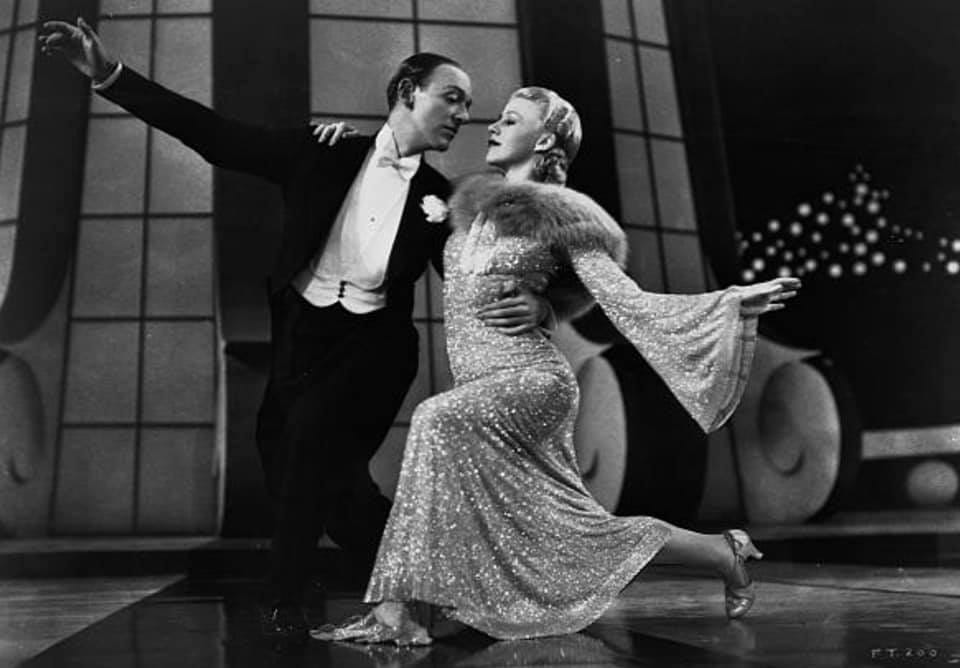
My mother tap-danced through chemotherapy.
I’ve lived with this since my mother died and it still makes me feel like a spiritual underachiever. While she was losing her hair and her strength and eventually, heartbreakingly, her life, she was dancing. Literally. Tap shoes. Rhythm. Jazz hands.
Her philosophy, when faced with any of life’s sucker punches, was this: Let’s face the music and dance.
Mine, if I’m being brutally honest, is: Let’s Google symptoms at 2 a.m. until we’ve diagnosed ourselves with three rare cancers and one that you later learn only affects cows. I guess the term bovine should have given me a clue that I was actually on a farm veterinary site.
This afternoon I have an MRI. There’s a mass in my uterus, found on an ultrasound, a finding that arrived like a small bomb that detonated in my head. My husband, who happens to be a doctor, has told me it’s benign. He doesn’t just say this, he guarantees it with the unshakeable confidence of a man who has been practicing medicine for five decades, teaching medical students, and apparently developing some kind of diagnostic superpower along the way.
“Have I ever been wrong?” he asks.
The answer is no, he hasn’t. And yet, I’m unconvinced. The radiologist said he doesn’t think it’s something to worry about, “probably a fibroid.” My gynecologist has offered the same reassurance, adding the “probably” which cuts the reassurance in half.
I have chosen to believe none of them and have gone straight to the dark place anyway.
I’ve already lost my hair. I’ve already scheduled the hysterectomy and the chemotherapy. I’ve cancelled my upcoming trip to New York. In the span of thirty-six hours, I have lived out an entire alternate timeline in which I am very, very sick.
This is not my first rodeo with a scary diagnosis. Six years ago, heart disease arrived without knocking. No warning, just a result on a heart scan and a doctor’s very serious face. I worked hard and changed everything. I learned I was capable of more than I thought. But it hasn’t stopped me from checking my pulse every time my heart feels like it’s skipping beats, and right now, it’s jump roping from fear.
But cancer. That word doesn’t live in the same zip code as the others. Cancer is where my imagination goes feral. It doesn’t matter that heart disease is the number one killer of women. At least with heart disease, if you have a fatal heart attack, you clutch your chest and drop dead. Cancer, on the other hand, can be slow and hard to watch. It has a way of taking not just the life but sometimes the dignity of someone you love. I’ve watched this firsthand.
I’ve had the usual scares. The abnormal pap smears, the breast biopsy that turned out to be nothing, the kind of medical near-misses that age you slightly and make you hold your coffee cup a little tighter the next morning. But there’s something about the word mass that short-circuits the rational brain entirely. It doesn’t matter that the odds are in my favor. I’m not thinking about odds. I’m thinking about wigs.
More than once, in moments of diagnostic panic, I have asked my hair stylist Aliza whether she could make me a wig that looks just like my own blonde hair. The conversation started years ago when I came in to find her styling a beautiful long wig for an Orthodox Jewish woman, a tradition of covering one's hair with a wig rather than a scarf. I already knew I was not a scarf person.
Her response, every time, is delivered with the patience of a saint and the confidence of a really great hair stylist.
“You are the only client who has ever asked me this question to prep for cancer that you don’t have,” she says. “And of course I can.”
I choose to take this as a compliment. I am unique and prepared. I am also unhinged.
After the result of the ultrasound and scheduling the MRI, I did what any self-respecting catastrophist does: I made the calls.
First, to my sister. I asked her the question I always ask: “What if it’s cancer?”
Her response, the same every time I ask: “That would really suck.”
And then, because she is the good witch in this family coven, she paused and told me she felt nothing weird. No bad energy. No alarm bells. This comes from a woman whose instincts I trust. She’s the one who has always felt the hair on the back of her neck stand at attention when something is wrong. Italian mob radar.
Next, my daughter, who Googles with the precision of a research scientist and delivers the probably-nothings like a gift. She is calm where I am chaos. She somehow inherited my worry gene and yet deploys it backward. “Mom, I’m sure it’s benign,” she tells me as she’s obviously googling. “From the results, it seems like just a small benign finding like a fibroid or polyp.”
Then my daughter-in-law, who I’m convinced has psychic powers. I hesitate before I call her because she has predicted things that came true. She doesn’t deal in empty reassurance; she deals in something more certain: “I know you’re okay.” I don’t question it. I just accept her prediction like the spiritually desperate person I am in these moments.
Finally, my best friend since we were sixteen, the woman who has seen every version of me. She doesn’t offer me comfort exactly. She offers me something better: a badass boss. She becomes someone I cannot argue with.
When I tell her what I’ll do if the results are cancer, that I’ll crawl in a corner or do a Thelma and Louise, she says, “So, you’re just going to throw in the towel? Not happening. Buck up buttercup.”
I tell her I want to be okay. I want to skip the whole chapter entirely and go straight to the part where someone says those two words and I can finally exhale. An hour passes and she’s still on the phone giving me the stern, but motivating pep talk. She has talked me off many ledges and she does it with such sheer force of will that I don’t even realize I’ve been ledge-adjacent until I’m already back on solid ground.
The calls help but there are only two words that will save me: It’s benign. Those are the only words that will allow me to dance and pop the champagne bottle.
Before I go any further, I want to acknowledge that what I’m about to write is going to make me sound like Mother Teresa. My husband would agree with half of that. The other half, he says, is Sonny Corleone. So before you judge a woman who may or may not be dying, just know you’re dealing with both of them at once.
I’ve often wondered if anyone really understands why I’m so afraid of dying.
My Brazilian cousin, a woman of rare emotional intelligence and the one I credit for my ritual of praying naked with my hands crossed over my breasts in the shower, once said something I’ve carried in the pocket of my chest ever since.
We were on her New York apartment veranda talking about death. Not morbidly, just the way you do when you’ve both watched people you love leave too soon. She said she wasn’t afraid of dying. She was afraid of not being here to take care of her family.
My first thought was: This may be the only person who really gets me.
I think my entire purpose on this earth is to take care of everyone else in it. I’m the one who fixes things, handles things, solves things. And when I go to the dark place, the cancer place, the what-if place, my fear isn’t really about dying, it’s about leaving. Who will fix everything? What happens to all of them if I’m not here?
I want to be here when my grandchildren figure out who they are. I want to be the person they call when things go sideways. I want to rescue them if they need it.
And I want time, more of it. Time spent with my children and my family and friends, more vacations, parties, celebrations. My mother wanted all of those things too. More life, more dancing, more time. She only met four of her five grandchildren, and not one of her four great grandchildren. What a loss, for her and for them.
Life isn’t fair.
And since I cannot be kind to myself for more than thirty consecutive seconds, I start playing the blame game. I call it the if onlys.
If only I had taken those heart-related blood results more seriously. If only I’d seen a gynecologist sooner. If only I took better care of myself instead of everyone else. I am apparently excellent at taking care of other people and criminally negligent when it comes to myself, a fact I’ve been told by enough people that I’ve had to accept it as a character trait rather than an oversight.
I’m thinking of making the if onlys into a board game for neurotic people like myself. The idea of rolling the dice makes perfect sense. Every day that we wake up is a roll of the dice, hoping we don’t land on cancer, or Alzheimer’s, or something worse.
And then, right on cue, I think of my mother.
My mother would be upset with me right now, lovingly, warmly upset. She would tell me to stop worrying until I had reason to. She would tell me to stop jumping to the worst conclusions. Here’s another if only: If only I could be like my mother.
Every morning, she drank her coffee like it was a religious experience. “Ahhhh,” she’d say, closing her eyes like someone who had just found nirvana in a coffee cup.
“Did you do something different with the coffee today?”
“No, Mom. Same coffee.”
“Well, it’s the best cup I’ve ever had.”
Every evening, she ran outside to watch the sunset. Every single one was the most beautiful she’d ever seen. I told her once that I’d never watched a sunset without wondering if it was my last. She gave me the look, followed by the Ted Talk.
“Don’t ruin your present life worrying about a future you can’t control. You could get hit by a bus.”
In a few hours I will be lying in an MRI machine, shaking, bargaining with every saint and dead relative I can name, and hoping the bus doesn’t arrive disguised as cancer.
It’s only 10 a.m. and I’m wondering if it’s too early for champagne.
My mother’s voice arrives immediately: It’s five o’clock somewhere.
My own voice arrives half a second later: No champagne until you have a reason to celebrate.
So I’m here, writing this instead. Trembling. Trying to be present, occasionally stopping to once again check how many times the word cancer appears when you Google “uterine mass.” The answer, for those wondering, is: too many times.
Here’s the thing I can’t shake in the middle of all this panic: My mother lived in the present. She died having loved her life and everyone in it, fully and completely, even the parts that were terrifying.
I am not my mother. I will never be my mother. I have accepted this the way you accept a lot of things about yourself after a certain age. She faced the music and danced. I face the music and immediately check if our will and trust are current.
So until I get the results of the MRI, I’ll do what I always do: prepare for the worst, keep one eye on the door for the bus I’m convinced is coming, and hold off on the champagne until I have an actual reason to open it.
And if the news is good?
Pop the cork, turn on the music, and dance.
Update:
When the MRI was completed, I got dressed. My husband was already speaking to the radiologist, and then he mutters the two most beautiful words in the English language:
It’s benign.
No mass. Just a cyst.
I stood there and ugly cried in the parking lot, which is the other thing I do besides worry. Then we went to dinner. I ordered a bottle of prosecco and a board piled high with salami and mortadella. What the hell, I’m not dying.
What a relief. I am so happy. And then, almost immediately, I remembered that I'm still mortal. But for now I'm not dying of this. My mother was right. Skip the cancer panic and get hit by a bus like a normal person.