

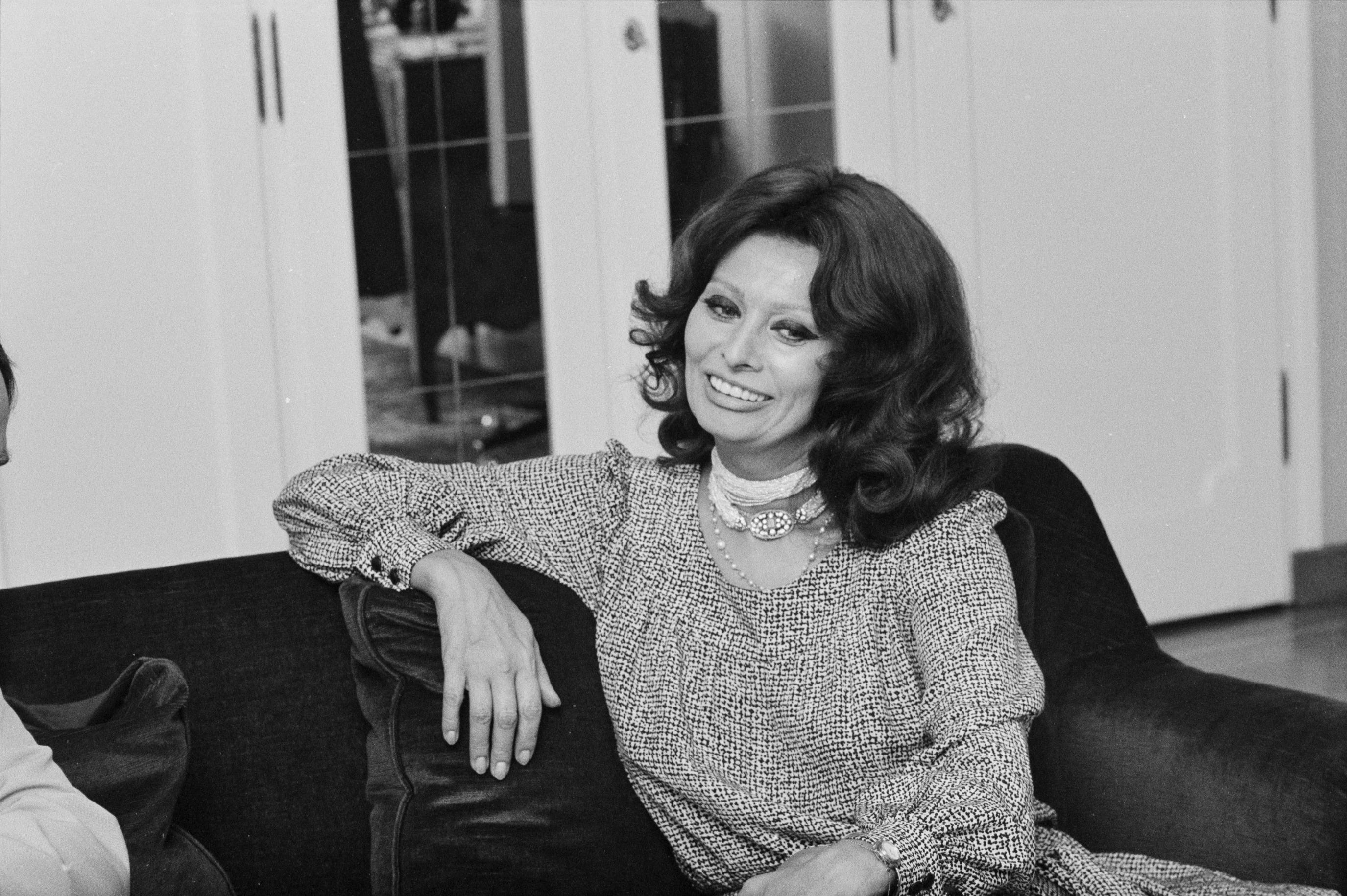
She was seventeen years old, standing in front of a man who held her future in his hands, and he looked at her the way people look at something that needs fixing. Her nose, he said, was too long. Her mouth was too big for the camera. Her face was too much. Her presence filled rooms in ways that made certain people uncomfortable, and if she wanted to succeed, she would need to become something more manageable. Something easier to look at. Something smaller.
She was Sophia Loren and she refused to listen.
“I don’t want to touch nothing on my face because I like my face,” she said.
You have loved this story your whole life. You have told it to other women. You want to believe it yourself.
And yet you type into the search bar: Am I too intense?
Maybe it was two in the morning. Maybe you were lying in the dark replaying a conversation, picking it apart, wondering where you crossed the line that apparently exists somewhere between passionate and unhinged, between loving deeply and being too much to handle. Maybe someone said it to your face. Maybe they didn’t have to because you read it in the way they stepped back, changed the subject, or went silent in that typical way that told you you’d done it again.
The thing is, it rarely comes as a direct accusation. It doesn’t always arrive loud and obvious, something you can point to and defend yourself against. It comes sideways. Offhanded. It finds you in the moments you least expect it.
It comes from a family member who asks why you pose a certain way in a photograph. Never mind that your mother, another too-mucher, a woman who understood that you take up space on purpose, taught you exactly how to stand in a frame and to own it. The question isn’t really about the pose. It’s kind of a signal: you are doing too much, even in a photograph.
It comes from a much younger family member who looks at you across a room and says it plainly, the way younger people sometimes do, as if the words have always been there, picked up from somewhere unnamed: you’re too intense. So you just smile because what else can you do, while something in you rises up wanting to answer back and then goes quiet because you know the trap. The moment you defend yourself against “too intense,” you become proof of it.
It comes from a friendship, the kind that makes you feel like you’ve committed a crime by simply showing up as yourself. Nothing you could ever quite name. Nothing you could hold up as evidence. So you make excuses. Maybe you’re being too sensitive. Maybe you misread it. Or maybe you’re just too intense.
So you add it to the pile. You know the one. The one that keeps getting heavier and heavier that you refuse to be buried under because this is what too much actually looks like. Not dramatic or villainous, and not something you can easily explain to someone who wasn’t there. It’s just a slow accumulation of small moments. A photo. Words from across a room. A drive home in silence that adds up to a woman alone in the dark asking the internet if she’s broken.
I am writing this to you, not the version of you that’s currently auditing yourself. The real one. The one who has opinions that are treated like something that wasn’t supposed to be said out loud.
Here is what I know about women like you: you were not born believing you were too much. That was taught.
Maybe you’ve learned to monitor yourself. To front-load apologies. To laugh and then immediately check the faces around you to see if it was too much, too loud, too long. You learned to serve yourself in small portions. To take the whole, complicated, beautiful mess of yourself and reduce it to something easier to digest.
A storm became a sprinkle. A hurricane became a light breeze. A flame became a flicker.
And still they said it. You’re a lot. You’re too intense.
The world that tells you to be less does not reward you for complying. It simply finds new things to ask you to surrender. Your voice first. Then your opinions. Then your needs. Then yourself. And let’s be honest about what’s happening right now. They are asking us to go back to a time when our voices were background noise and our opinions were tolerated at best. They are framing it as tradition, as virtue, as the natural order of things. But we know what it is. We have always known what it is. It is the same request it has always been, in a different dress.
I named this project Like Sophia because I saw myself in her. Growing up Italian, she was everywhere, on the walls, in conversations, and in the way the strong women in my family moved through a room like they owned the floor beneath them. But it was more than my heritage. It was recognition. Here was a woman who looked like something the world wanted to change and she didn’t let them.
There is a quote of hers that I return to again and again. She once said that she knows how to say no in twelve languages. Think about that. Not yes. Not maybe. Not let me make myself smaller so you’re more comfortable. No. In twelve languages. As if she understood, from the very beginning, that the world would come for her in many forms, from many directions, and she prepared accordingly. She did not learn twelve ways to apologize. She learned twelve ways to hold her ground. That is the woman I wanted to build this space around.
Sophia went on to win the Academy Award, to be called the most beautiful woman in the world, to live exactly the life she had always known was hers. Not because she fixed anything but because she refused the premise that she needed fixing.
Here is what I know after a lifetime of being told I was too much. Too intense is not a flaw or a character defect. It is not something a good therapist is going to fix. It is what someone says when they cannot keep up with you and would rather label you than examine themselves. They dress it up as concern. They deliver it as feedback
There is a difference between a flaw and an inconvenience to someone else.
Your intensity is why your phone rings when things get hard. It is why you’re the one people call at midnight, not to chat, but because something is wrong and you are the person they trust to handle it. It is why you are the fixer, the first call, the one who shows up with solutions before anyone even has to ask. It is why the people in your life lean on you the way they do and sometimes without even realizing how much.
And yet somehow you are the one sitting alone at two in the morning wondering if you are too much.
Think about that.
You are not too much.
That is what this whole project is about. Not fixing your nose or anything about you. I’m a woman who was handed bigness like a birthright, and I’ve decided to keep it. All of it. So many people in my life had opinions about that but I love being a Sophia. I love the fullness of her, the defiance of her, the way she stood in a room and simply refused to be anything other than exactly who she was.
So be a Sophia, a leading lady in your own movie and your own life. And never forget that you, too, can learn to say no in twelve languages.